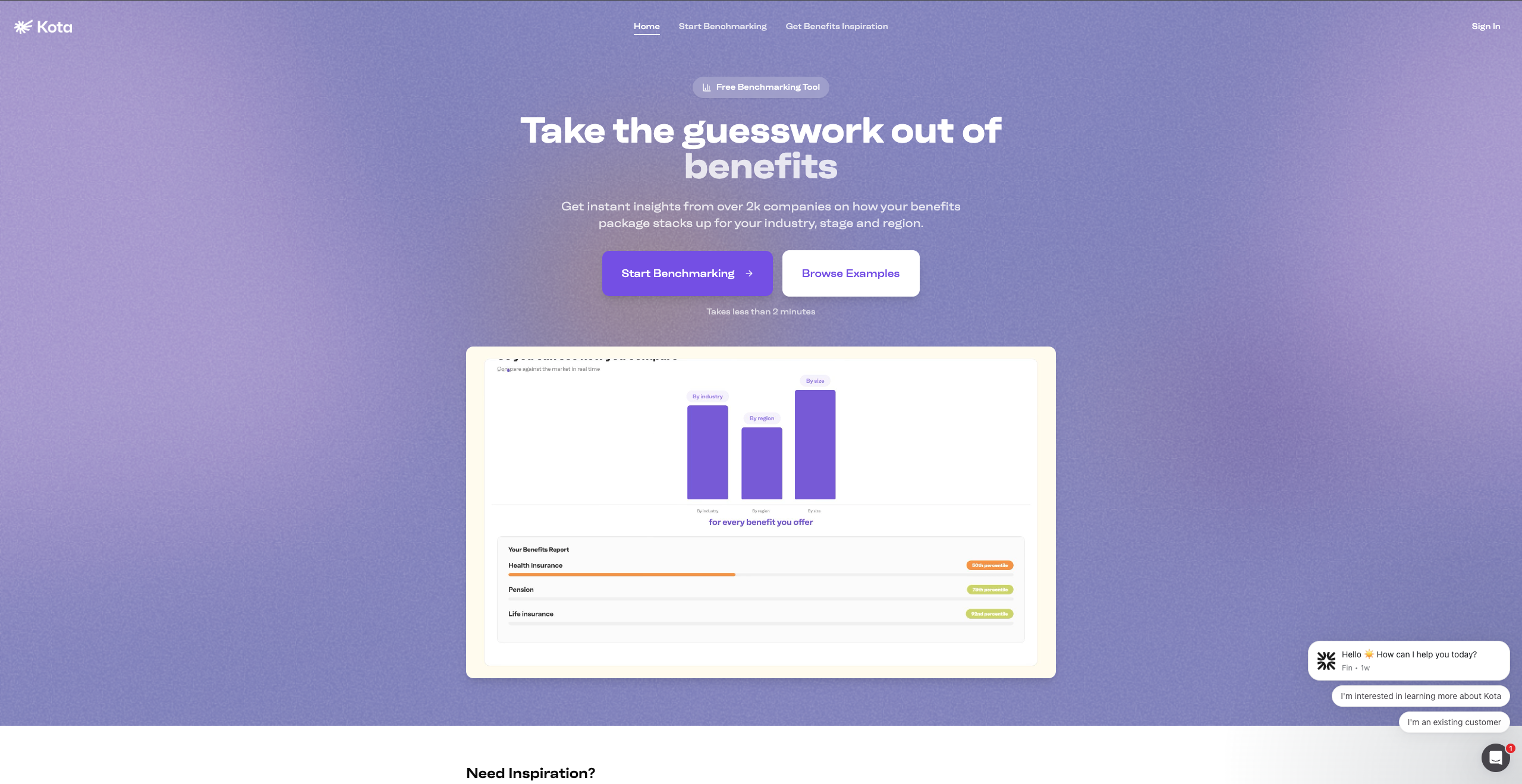
Validate your benefits package with our new benchmarking tool.
Compare the best Thanks Ben alternatives, including Kota, Gusto, and Paylocity. See which employee benefits platform delivers better value.
.webp)
.webp)
.png)
.png)
.png)
You are probably searching for “Thanks Ben alternatives” because you like modern, flexible benefits, but Thanks Ben isn’t ideal for you. This guide walks you through five strong options: Kota, Gusto, Paylocity, ADP TotalSource, and YuLife, so you can pick the right fit for your team.
Thanks Ben (now called Ben) has built a solid reputation for flexible benefit allowances and a modern interface. But it's not the right fit for every team.
Maybe you've hit friction with customer support, run into portal reliability issues, or found the reporting too shallow for your needs. Whatever the reason, you're here because you want something better.
This guide breaks down five Thanks Ben alternatives worth considering. We'll cover what each does well, where they fall short, and which types of teams they suit best.
We built Kota to modernise how businesses deliver core and flexible employee benefits.
Kota integrates directly with HRIS, payroll, and insurance providers to to automate health insurance, pensions, and life assurance for modern teams, and our clients are loving it.
We base our advice on deep expertise in years of employee benefits implementation and optimisation.
Thanks Ben (now called Ben) is an intelligent employee benefits management platform that lets HR teams centralise and automate benefits enrolment and usage.
It brings together benefits, rewards, and recognition in one place.
Many people love Thanks Ben for its flexible benefit allowances and modern UX.
But while the software is robust, it has its flaws, so teams end up looking for other options. Here are some common issues reported online:
Some users complain about slow or unresponsive help channels and a heavy reliance on chatbots.
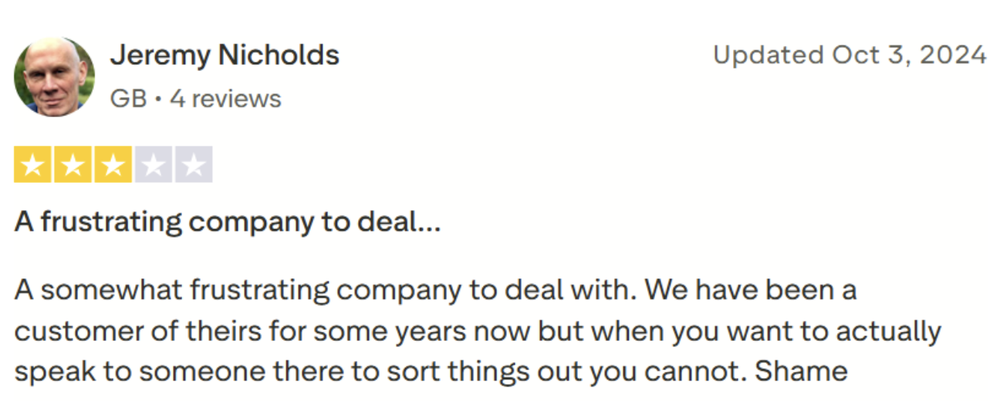
When HR teams can’t get timely human support, simple benefits issues can drag on for days.
This unresponsiveness increases internal tickets and frustrates employees who expect fast resolutions to pay or benefits-related problems.
Users report that digital wallet cards are sometimes declined or don’t work as expected.
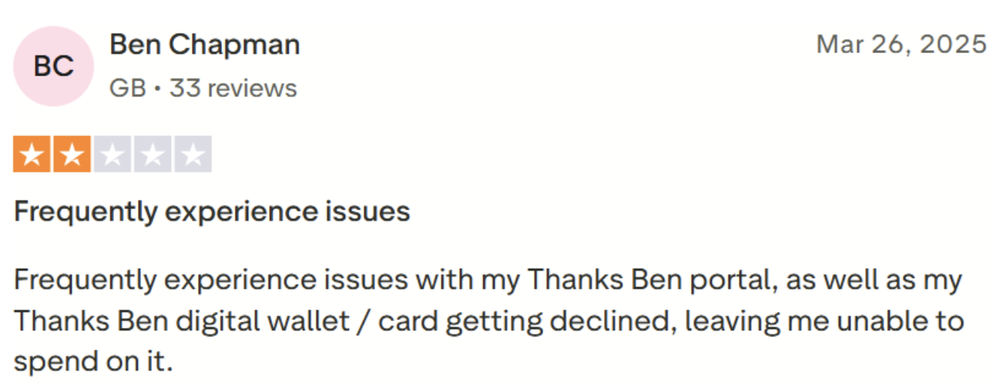
For employees, this creates embarrassment and mistrust at the point of purchase.
Meanwhile, HR teams are left firefighting complaints and manually reimbursing expenses that were supposed to be automated.
Some users say benefit information is difficult to track across dashboards and individual benefit pages.
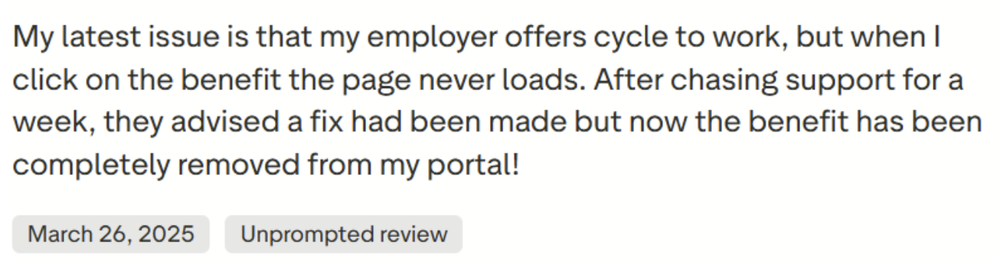
This lack of clarity can reduce benefit usage because employees don’t fully understand what they’re entitled to.
This lowers perceived value and weakens your total rewards strategy.
Businesses have mentioned slower-than-expected implementation timelines and misaligned expectations during setup.

These delays put extra pressure on HR teams, slow down benefits adoption, and can cause confusion or dissatisfaction among employees who were promised a new benefits experience.
HR professionals on Reddit note that reporting and insights can feel shallow or inflexible.

Without clear data on benefit engagement, usage, or ROI, HR teams struggle to justify spend, optimize offerings, or demonstrate the real impact of benefits to leadership.
Let’s zoom in to the alternative tools.
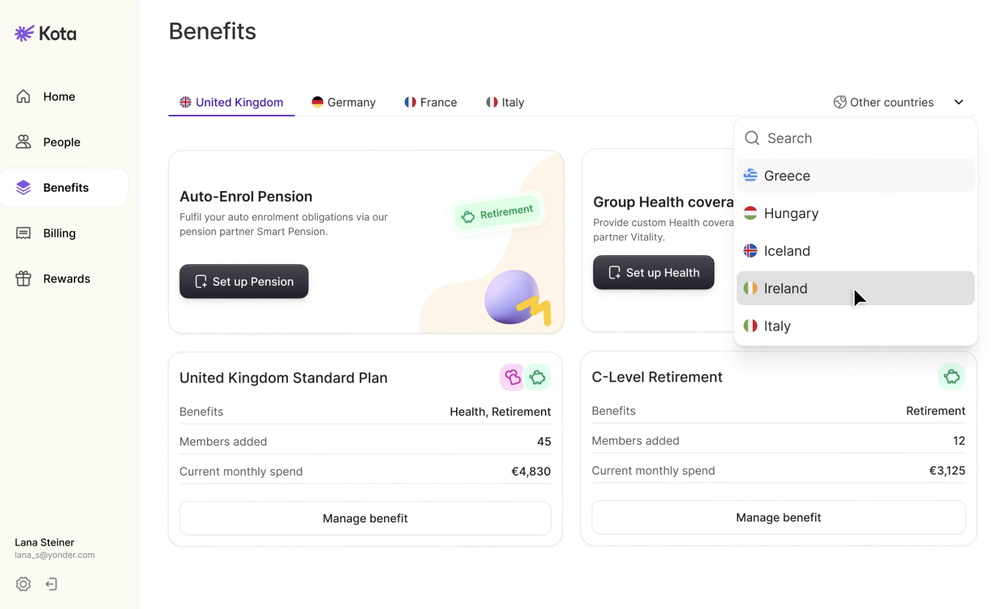
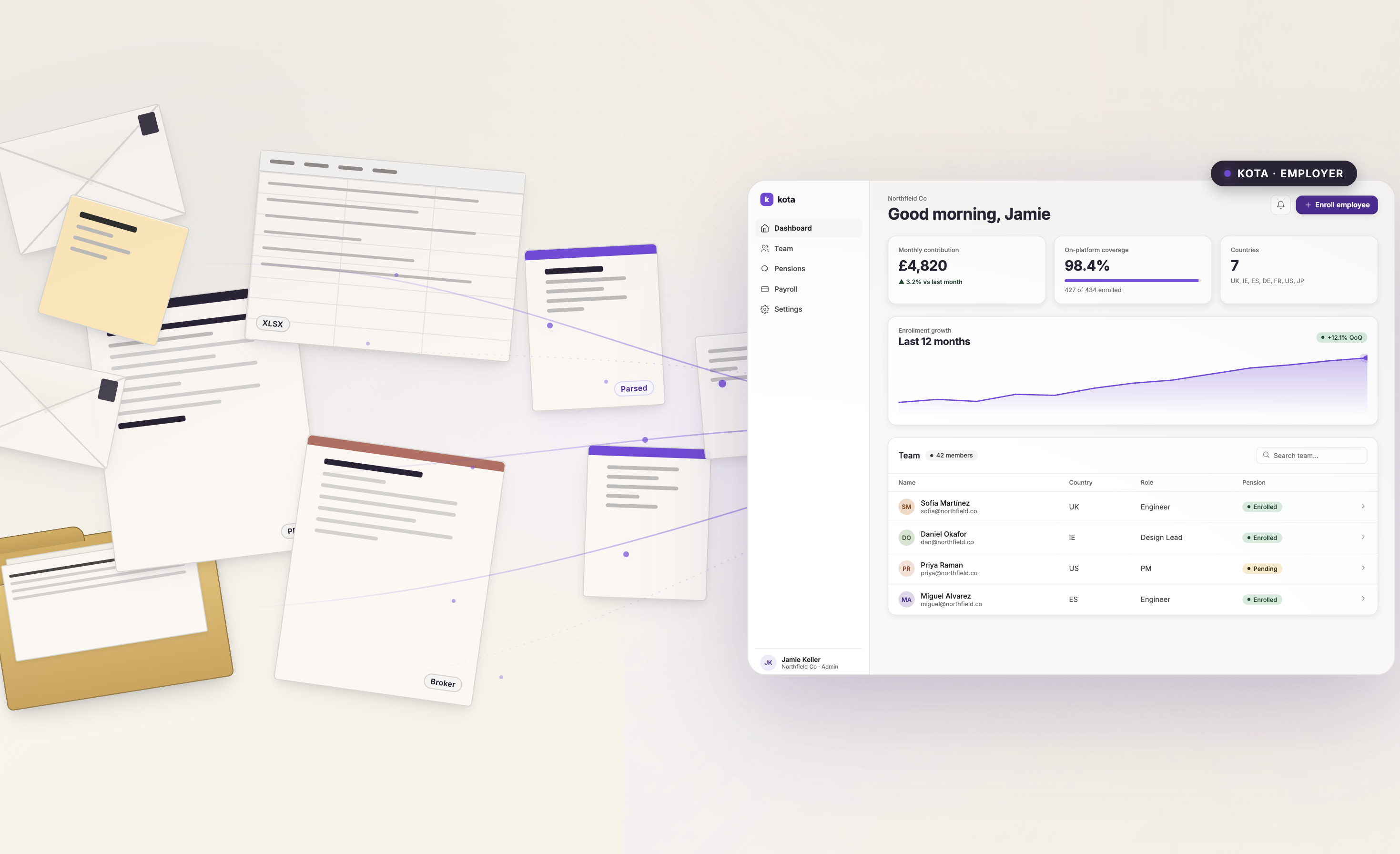
Kota is a modern broker alternative built to take all the work involved in running benefits off your plate, and deliver a much more engaging employee experience. It handles the entire benefits journey, from HRIS integration through to end providers.
It connects your HRIS to health insurance, pensions, and flexible benefits. Enrolment, changes, and cancellations run on autopilot. You manage everything in one place. Employees use a single app to view, personalise, and control their benefits.
Ben focuses on flexible benefits through a marketplace model, but you'll still need a traditional broker for core benefits like pensions and health insurance.
Kota is different - it's built as a modern broker alternative that removes all the work involved in running benefits.
Unlike Ben which requires you to manage core provider relationships separately, Kota syncs directly from your HRIS to end providers like Vitality, Bupa, Allianz, and Smart Pension. This means:
Ben's marketplace approach works for flexible allowances, but Kota delivers both core benefits (pensions, health insurance) and flexible benefits in one integrated system.
Kota uses clear, nothing-to-hide pricing:
Scaling small-to-mid-market and mid-market companies across the UK and Europe that want an all-in-one flexible benefits platform with predictable pricing.
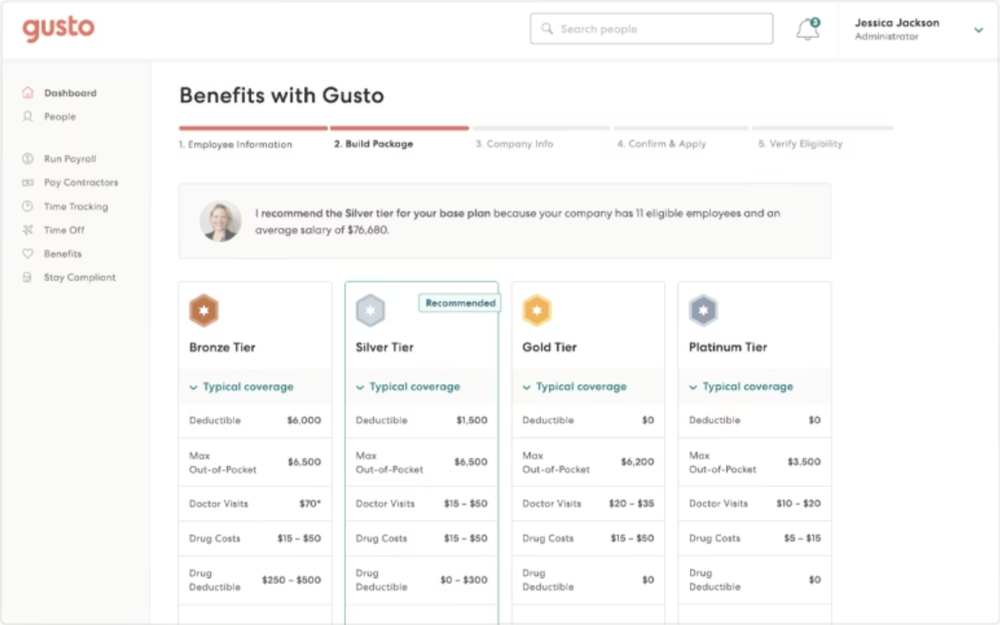
Gusto combines payroll, HR, and benefits administration in one platform. It aims to make paying your people and staying compliant simple, with transparent pricing and plans that grow with your company.
It’s popular with SMBs, thanks to its strong payroll engine and easy-to-use interface.
If payroll and compliance are your biggest challenges, Gusto may deliver faster value than a benefits marketplace like Ben.
It combines payroll and benefits in one system, removing the need for separate tools for pay runs, tax filing, and basic benefits admin.
Ben emphasises wallets, allowances, and marketplace perks. Gusto is often praised for clear pricing, unlimited payroll runs, and strong payroll automation. This helps reduce the risk of payroll and tax errors.
Gusto’s biggest drawback is limited customisation options.
Gusto offers three plans:
Small to medium-sized businesses that want all-in-one payroll, HR, and benefits tools.
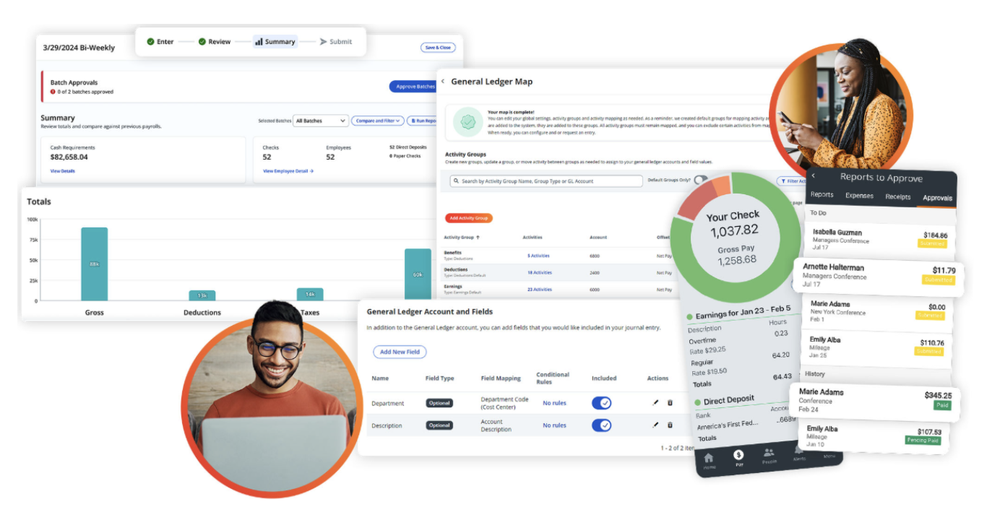
Paylocity is a comprehensive workforce management and HR platform focused on payroll, HR, talent, and employee experience. It’s an all-in-one system for HR teams that want modern automation plus analytics and engagement features.
Paylocity is a good option for mid-sized and larger companies that need more robust HR capabilities.
Ben is brilliant with flexible allowances and wallets.
However, Paylocity offers a broader, all-in-one HR platform. It combines payroll, performance, time tracking, learning, and benefits in one system, which reduces tool sprawl.
Also, Paylocity has a module for nearly every HR need. This reduces the number of vendors and integrations to manage. By contrast, Ben users sometimes report portal issues, which can be frustrating when benefits are a standalone, high-touch tool.
Paylocity has often been condemned for poor customer support.
Custom, based on company size and module requirements.
Mid-sized companies seeking a full HR and benefits system with payroll integrated.
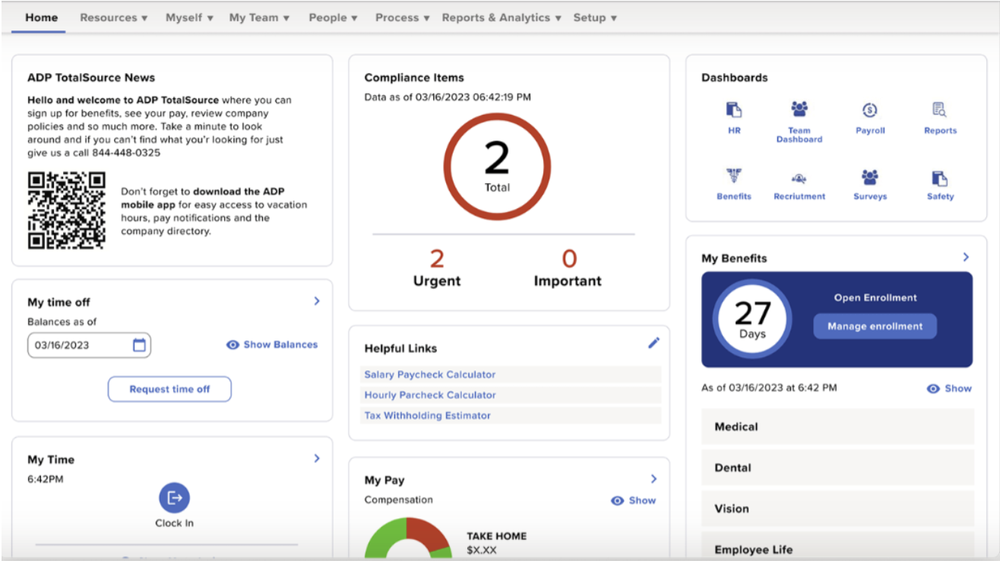
ADP TotalSource is a Professional Employer Organisation (PEO) service that provides businesses with outsourced HR, payroll, benefits, compliance, and risk management solutions through a co-employment model.
In this arrangement, you keep control over your employees’ day-to-day work, while ADP handles critical HR and administrative responsibilities.
While Ben handles mostly benefits, ADP TotalSource goes far beyond help with benefits.
It takes on full HR, compliance, tax, and payroll responsibility, backed by decades of experience and deep insurance offerings. The reduced burden on HR frees leadership teams to focus on growth and operations, unlocking more growth.
ADP TotalSource’s biggest disadvantage is the typical high cost of PEOs compared to companies that offer benefits administration only.
Custom quotes based on company size and needs.
Small and medium businesses that want outsourced HR support and top-tier benefits plans.
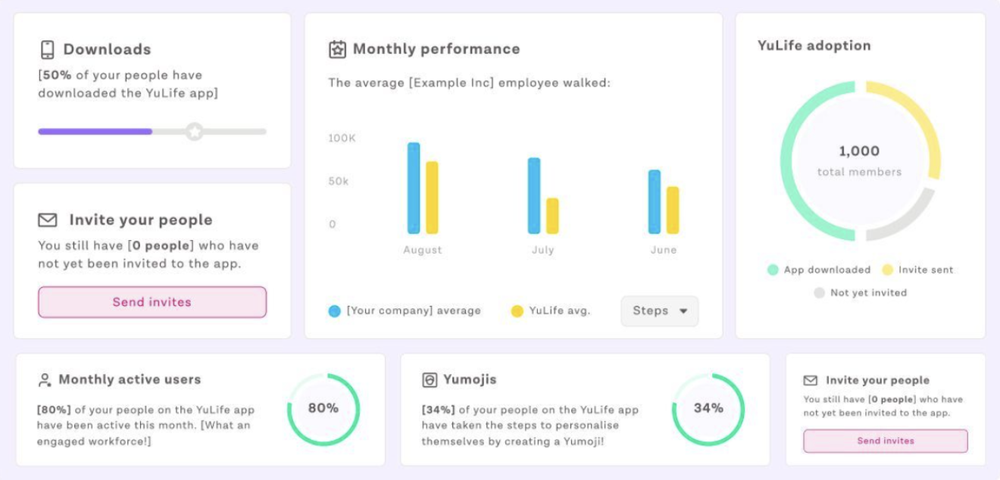
YuLife blends employee wellbeing, insurance, and rewards into one engagement-focused platform. It motivates healthy behaviour with gamification and reward systems.
The platform’s gamified wellbeing app rewards your employees for healthy activities like walking, meditation, and cycling.
YuLife focuses on daily engagement and wellbeing rather than allowances and marketplace benefits like Ben.
So, if your team's focus is employee wellbeing and boosting engagement, YuLife will do a better job than Ben. It’s fun and daily healthy challenges significantly boost engagement by as much as 93% according to the company’s reports.
YuLife boosts benefit adoption way more than traditional platforms like Ben.
YuLife’s biggest downside is limited coverage of non-wellness benefits.
Typically custom and based on company size and desired coverage.
Companies prioritising employee wellbeing, engagement, and incentives within their benefits stack.
Each of these tools excels in different aspects.
Your ideal Ben alternative should align with your company’s size, budget, and strategic priorities:
For swift end-to-end core and flexible benefits automation from HRIS to providers, Kota leads the way.
👉 Book a demo now
Trevor Gardiner QFA, RPA, APA in Insurance. With 23 years of experience in Financial Services, I have a strong passion for Health Insurance and Pensions.

.png)
.png)
.svg)
.svg)
.svg)